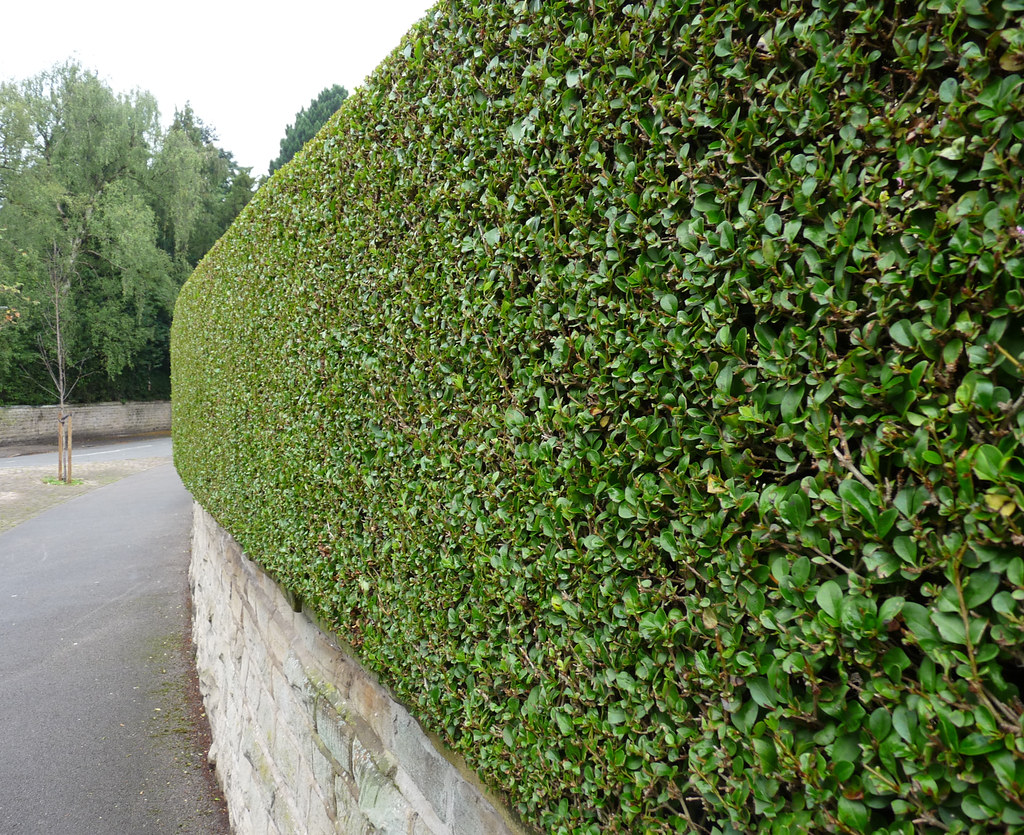
Hedge photo: Mark Hadley via Flickr, CC BY 2.0 (Openverse).
Little and often wins
The golden rule of hedges: trim little and often. Each cut stimulates branching, and branching is what makes a hedge thick. A hedge trimmed twice a season stays dense from top to base; one hacked back every three years turns woody, gappy and resentful.
For most Christchurch suburban hedges — privet, pittosporum, laurel, photinia — that means a trim in late spring after the first flush hardens, and another in late summer or early autumn.
Cut on a taper
Hedges should be slightly wider at the base than the top — a gentle batter of a few degrees. This lets light reach the lower foliage so the bottom stays clothed instead of going bare and leggy.
String a line for long runs if your eye is not confident. Level tops and straight faces are what separate a professional-looking trim from a haircut gone wrong.
Time it around the birds
Spring hedges can hide nesting birds. Check before cutting in the main nesting season — if a nest is active, leave that section alone until the chicks have fledged. A few weeks' delay costs nothing against a season of guilt.
Avoid trimming in extreme heat too: freshly cut foliage scorches, and stressed plants sulk. Mild, overcast days are ideal.
Feed the clippings back
Hedge trimmings are excellent mulch or compost material once shredded — returning them to the garden closes the loop. Thorny or diseased material should go in the green bin instead.
And if the hedge has already won — three metres tall, swallowing the path, neighbours peering over the top — that is exactly the 'no job too wild' territory. A staged reduction brings it back under control without killing it.
Need a hand?
Tips only go so far — if your garden needs the real thing, see the gardening services or message Davis Gardening on Facebook.